Find out which of these two adhesives work best for your hair system.
The research has been done! Took some time, but definitely got the answer some of you have been looking for. To the many clients who have asked the difference between these two adhesives this blog is for you!
We had even contacted our Walker Reps to make sure our points had validity.
Since starting to stock up on Extreme Hold Glue we have been asked what the difference is between these two liquid adhesives – Extreme Hold and Ultra Hold Glue.
First let’s get to know a little bit about the two:
Extreme Hold is a silicone based adhesive. In fact, during the conversations with our Walker Representative they mentioned that silicone based glues were extremely popular before the Acrylic glues came into fame.
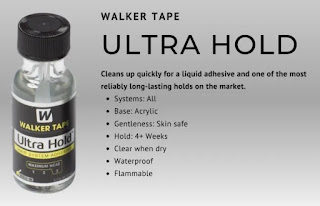
Which, of course, is the Ultra Hold. The Ultra Hold glue is an acrylic adhesive and is newer in the market. It holds just as long as the Extreme hold.
What is the DIFFERENCE?
Well the real difference between the two is really, the base. Whether you prefer a silicone or acrylic base will really depend on the the chemistry of your body and how well it breaks down these different glues.
There are a few clients that state that the silicone based adhesives are better and last longer, however it is a lot messier to clean up. They also claim that the glue is more sticky or (rubbery) than that of the acrylic base adhesive.
However, both glues dry up super clear and can hold up to 4 to 6 weeks.
So is there one better than the other? Well, it’s hard to say right now. There is definitely an even amount of clients who have used both types of adhesives that state that they switched over to the Extreme Hold because it held on longer than the Ultra Hold, but we also have clients who’ve bought the Extreme Hold and still prefer the Ultra Hold.
Overall, these two liquid adhesives are great for permanent soft bonding. Just like many other glues & tapes, it really depends on the breakdown and texture you feel most comfortable with.
Below we have attached the best practices to ensure your hair system will last you!

How To Use:
Step 1: Prep Skin with 99% Alcohol
Step 2: Wait to dry and add a scalp protector
Step 3: Let dry, then add a very thin and even layer of the Extreme Hold Glue.
Step 4: Blow Dry until adhesive becomes tacky
Step 5: Repeat Steps 3 and 4 one more time
Step 6: Apply the hairpiece and apply pressure for at least 10 seconds
How To Use:
Step 1: Prep Skin with 99% Alcohol
Step 2: Wait to dry and add a scalp protector
Step 3: Let dry, then add a very thin and even layer of the Ultra Hold Glue.
Step 4: Blow Dry until adhesive becomes tacky
Step 5: Repeat Steps 3 and 4 one more time
Step 6: Apply the hairpiece and apply pressure for at least 10 seconds
Need to make sure this adhesive doesn’t cause reactions. Do a patch test!
For more information on booking a virtual hair system consultation, visit our website at www.superhairpieces.com or www.superhairpieces.ca